Author: Claire Fitzsimmons
Art: Mariane “Mare” Leon
I started lifting because I wanted to be skinny.
I wish it were a more radical origin story. But like most women raised under diet culture, I walked into the gym thinking of subtraction. I wanted to get smaller. I didn’t know then that I was entering a different kind of transformation.
We’re deep in the second Trump era—after the marches, the thinkpieces, the midterms that didn’t fix anything. Roe v. Wade is gone. Kids are still being caged at the border. Palestine is being bombed. The grief is relentless, shapeless, and everywhere. I’m living in a country that feels like it is unraveling, and somewhere between doom scrolling and despair, I started going to Gold’s Gym.
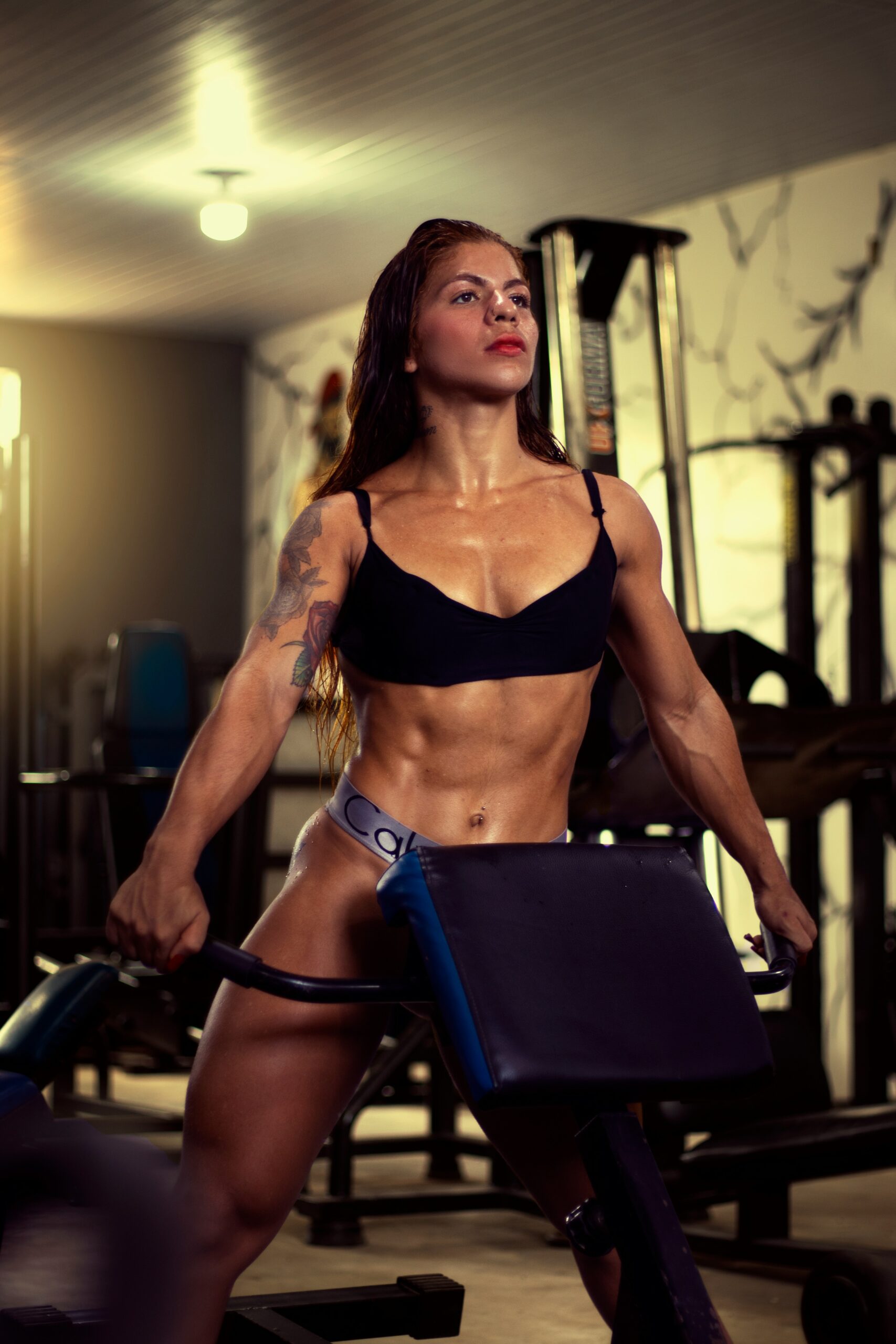
At first, I was just going through the motions. I followed a basic program. I hip-thrusted, squatted, and deadlifted. It felt good in a way I couldn’t name. And then, one day, this heaviness heaved out of me—in the grunts, in the last rep, in the weight I slapped on the bar. I cried after a heavy leg day. Not from pain. From everything else. Sadness, helplessness, grief. The tears came in the car afterward, as if my nervous system had been shaken loose and needed to recalibrate.
People think I’m a pretty tough gal, but I still wrestle with an internal narrator shaped by years of diet culture and patriarchy that tells me to be smaller. Shrink my thighs. Don’t take up too much space on the leg press. Don’t correct the guy who gives you unsolicited advice mid-set.
Gold’s Gym is the last place you’d expect a feminist awakening. It’s theatrical and hypermasculine—wall-to-wall meatheads, bodybuilders, fitness influencers live streaming their sets. The air smells like ammonia and pre-workout. I was nervous at first. I wore baggy shirts. I didn’t make eye contact.
“My muscle isn’t ornamental—it’s insurance. Every rep builds not just strength, but readiness. Just in case.”
But now? I take up space.
I’ve even started a quiet resistance drill: when men walk toward me in the gym, I don’t move. I used to step aside automatically, as if I were the obstacle. The first time I held my ground, I got shoulder-checked—hard—by a young guy who didn’t even turn to look. I was invisible to him. But I don’t move anymore. If we collide, we collide.
But somewhere deep in my subconscious, I think I might be training for the worst. In a country that has stripped me of legal ownership over my own body, where the law won’t protect me from forced birth or state violence, I’ve started to see strength as a survival skill. If I need to run, I can. If I need to fight, I will. Every rep builds not just strength, but readiness. Just in case.
More women are lifting than ever before. As *The New York Times* recently reported, books about women and muscle are having a moment, from Johnston’s work to Bonnie Tsui’s *On Muscle*, which explores why muscle matters and what it means to build it. This shift is personal and cultural. Women are choosing resistance- literally and figuratively.
“Strength, in this moment, isn’t just personal—it’s political. It’s a refusal to vanish.” “I’m training to resist, yes—but also to run, to fight, to survive if I have to. Every rep is an act of resistance, and every muscle I build makes me harder to ignore.”
As Casey Johnston writes in *A Physical Education*, “Strength is a skill, and anyone can learn it.” She’s right. But for me, it’s more than a skill. It’s a language I use to rewrite what I’ve been taught to believe about my body.
Interestingly, conservative women are lifting too. On TikTok and Instagram, there’s a growing cohort of tradwives and right-wing influencers lifting heavy in the name of fertility, patriarchy, and homemaking. Some outlets even reported that these women view strength training as part of their domestic calling—build glutes for birthing, stay fit for your husband, avoid being “high-maintenance” by aging out of attractiveness.
I may not be able to stop the unraveling of the country or stem the tide of global grief, but I can choose to be bigger. I can choose to be unmoving. The weight I lift is the palpable, physical counter-force to the shapeless despair outside the gym doors. It’s a statement: I will not be marginalized, legislated, or shrunk out of existence.
While some seek strength to serve an antiquated vision of domesticity, for me, this body I’m building is a monument to defiance: a refusal to be passive, a promise to take up space, and a silent, muscular guarantee that if resistance is needed, I’ll be ready to deliver. In an era that seeks to control, constrain, and silence, getting jacked is the most radical thing I’ve ever done.
About the Author:
Claire Fitzsimmons is the Founder and Director of Salty. When she isn’t sifting through pitches, producing photo shoots, or screaming into the void, she’s weightlifting, gardening, and rescuing critters.